

What is CRM Software? A Complete Guide for Growing Businesses

 May 21,2026
  By Akhila Sathyan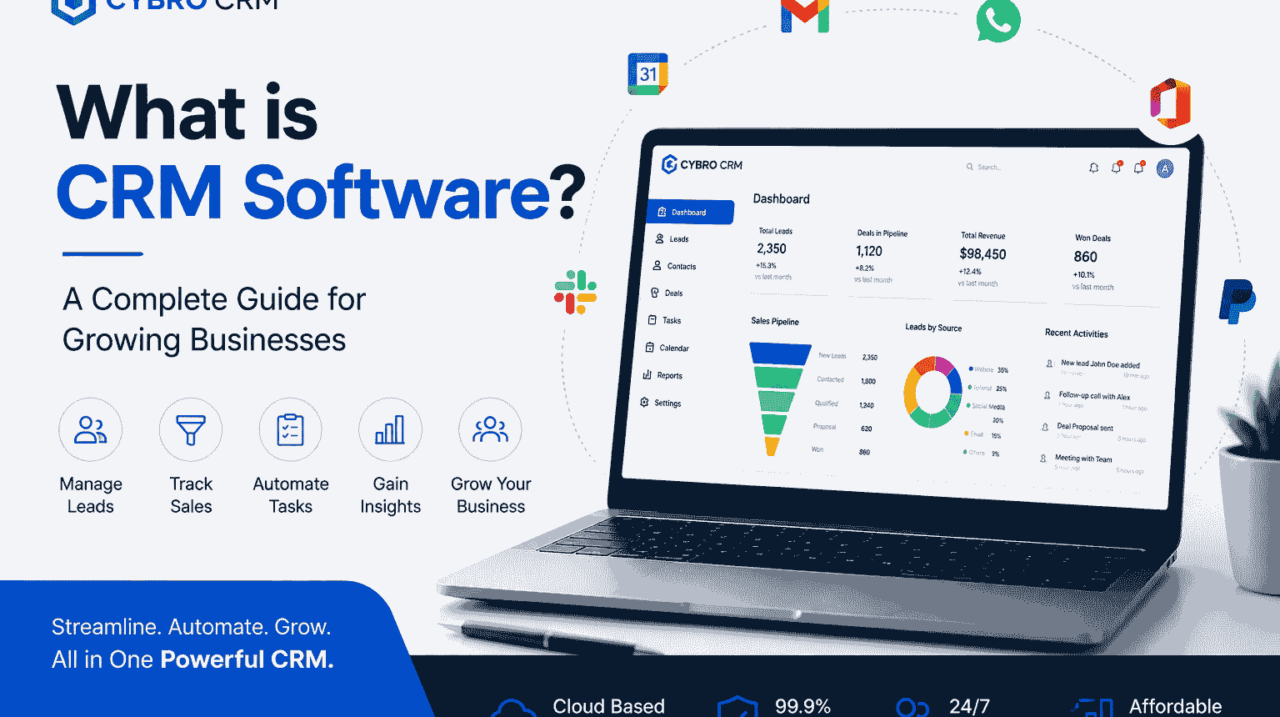
🔷 Introduction
Managing customer relationships is one of the most important aspects of any growing business. But as your business expands, handling leads, tracking follow-ups, and managing customer communication manually becomes difficult.
This is where CRM software comes in.
Customer Relationship Management (CRM) software helps businesses organize, automate, and improve their sales and customer interactions. Whether you are a startup, SME, or service-based business, using a CRM can significantly improve efficiency and sales performance.
🔷 What is CRM Software?
CRM (Customer Relationship Management) software is a tool that helps businesses manage customer data, track interactions, and streamline sales processes in one centralized platform.
Instead of using spreadsheets, emails, and multiple tools, a CRM system allows you to manage everything from one dashboard.
With CRM software, you can:
- Store customer information
- Track conversations and activities
- Manage leads and opportunities
- Automate follow-ups
- Monitor sales performance
🔷 Why CRM Software is Important for Growing Businesses
As your business grows, managing data manually becomes inefficient and error-prone.
Without CRM:
- Leads get lost or forgotten
- Follow-ups are inconsistent
- Sales teams lack visibility
- Data is scattered across tools
With CRM:
- All customer data is centralized
- Sales processes become structured
- Teams collaborate more effectively
- Decision-making improves with data insights
This is why businesses moving from Excel or manual tracking to CRM see immediate improvements in productivity and conversions.
🔷 Key Features of CRM Software
A good CRM system provides a range of features that help businesses manage their operations effectively.
1. Lead Management
CRM helps capture, organize, and track leads from different sources such as websites, social media, and campaigns.
2. Sales Pipeline Management
You can visualize your entire sales process and track deals at every stage, from initial contact to closing.
3. Workflow Automation
Automate repetitive tasks such as follow-up emails, reminders, and lead assignments.
4. Customer Communication
Manage emails, calls, notes, and meetings from a single platform.
5. Reporting and Analytics
Track sales performance, conversion rates, and team productivity using real-time reports.
6. Task and Activity Management
Schedule tasks, set reminders, and ensure nothing is missed.
🔷 Benefits of Using CRM Software
Implementing a CRM system provides multiple benefits for growing businesses.
1. Better Lead Management
All leads are organized in one place, making it easier to track and convert them.
2. Improved Follow-Ups
Automated reminders ensure that no opportunity is missed.
3. Increased Sales Conversions
Faster response times and better tracking improve closing rates.
4. Enhanced Team Productivity
Sales teams spend less time on manual tasks and more time selling.
5. Centralized Data
All customer information is stored in one system, reducing confusion and duplication.
6. Data-Driven Decisions
Reports and insights help businesses make smarter decisions.
🔷 Who Should Use CRM Software?
CRM software is useful for a wide range of businesses:
- Startups looking to scale operations
- SMEs managing growing customer bases
- Agencies handling multiple clients
- Logistics companies tracking customer communication
- Service providers managing inquiries and follow-ups
If your business deals with leads, customers, or sales processes, a CRM system is essential.
🔷 Types of CRM Software
Understanding different types of CRM systems can help you choose the right one.
1. Operational CRM
Focuses on sales automation, lead management, and daily operations.
2. Analytical CRM
Provides insights through data analysis and reporting.
3. Collaborative CRM
Improves communication between teams such as sales, support, and marketing.
Most modern CRM platforms combine all these functionalities.
🔷 Cloud CRM vs Traditional CRM
Cloud CRM
- Accessible from anywhere
- No installation required
- Lower cost
- Automatic updates
Traditional CRM
- Installed on local systems
- Higher setup cost
- Limited accessibility
Today, most businesses prefer cloud CRM due to its flexibility and affordability.
🔷 How to Choose the Right CRM Software
Selecting the right CRM is crucial for long-term success.
Consider These Factors:
1. Ease of Use
Choose a simple and user-friendly platform
2. Features
Ensure it includes lead management, automation, and reporting
3. Customization
The CRM should adapt to your workflow
4. Pricing
Look for affordable and scalable options
5. Integrations
Check compatibility with tools like email, WhatsApp, and payment systems
🔷 Common Mistakes to Avoid
- Choosing overly complex CRM systems
- Ignoring scalability
- Not training your team properly
- Failing to use automation features
🔷 How CRM Improves Business Growth
CRM software plays a key role in scaling your business.
It helps you:
- Capture more leads
- Respond faster to customers
- Track performance accurately
- Improve customer relationships
- Increase revenue over time
Businesses that use CRM effectively gain a strong competitive advantage.
🔷 Conclusion
CRM software is no longer just a tool for large enterprises. It is an essential system for any business that wants to grow, improve efficiency, and manage customer relationships effectively.
By centralizing data, automating processes, and providing actionable insights, CRM helps businesses stay organized and focused on what matters most — closing deals and building long-term customer relationships.


 May 21, 2026
