


How CRM Automation Helps You Close More Deals Faster

 May 21,2026
  By Akhila Sathyan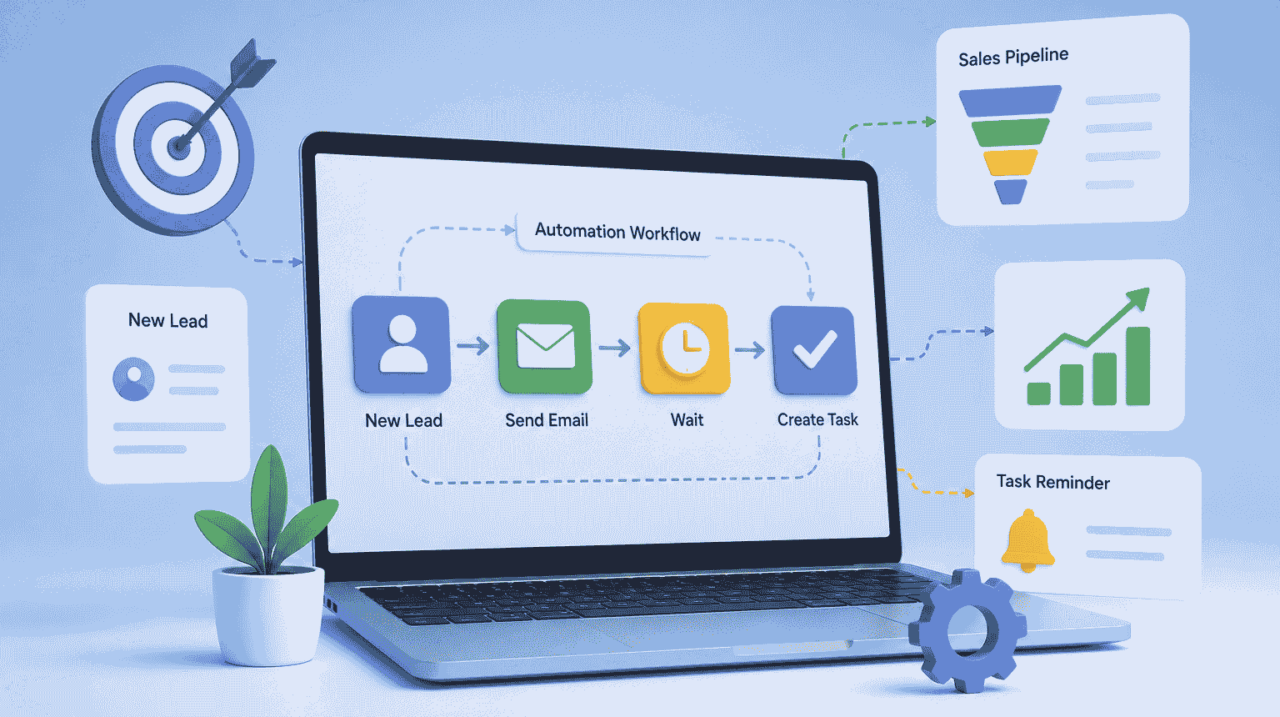
🔷 Introduction
Sales teams often spend a significant amount of time on repetitive tasks like sending follow-up emails, assigning leads, and updating records.
These manual processes slow down productivity and increase the chances of missed opportunities.
This is where CRM automation becomes a game-changer.
CRM automation helps businesses streamline their sales process, reduce manual work, and improve efficiency — allowing teams to focus on what really matters: closing deals.
🔷 What is CRM Automation?
CRM automation is the use of technology within a CRM system to automate repetitive tasks and workflows in the sales process.
Instead of manually managing every activity, the CRM system handles tasks automatically based on predefined rules.
Examples include:
- Sending follow-up emails
- Assigning leads to sales reps
- Creating tasks and reminders
- Updating deal stages
🔷 Why CRM Automation is Important
Without automation:
- Leads may not be followed up on time
- Sales reps waste time on manual work
- Important tasks get missed
With automation:
- Every lead is tracked and nurtured
- Tasks are completed on time
- Sales teams focus on selling instead of admin work
🔷 Key CRM Automation Features
🔹 1. Automated Lead Assignment
Automatically assign incoming leads to the right sales representative based on criteria such as location, source, or availability.
Benefit:
Faster response time and better lead handling
🔹 2. Follow-Up Automation
Set automated emails or reminders to follow up with leads at the right time.
Benefit:
No missed opportunities and improved engagement
🔹 3. Workflow Automation
Create workflows that trigger actions based on specific conditions.
Example:
- When a lead is created → assign to the sales rep
- When status changes → send email
Benefit:
Consistent and efficient processes
🔹 4. Task Automation
Automatically create tasks for sales teams when certain actions occur.
Benefit:
Better organization and accountability
🔹 5. Deal Stage Automation
Automatically move deals through the sales pipeline based on actions or conditions.
Benefit:
Clear visibility and faster deal progression
🔷 Benefits of CRM Automation
🔹 1. Saves Time
Automation eliminates repetitive tasks, allowing your team to focus on high-value activities.
🔹 2. Improves Follow-Up Consistency
Every lead gets timely follow-ups, increasing the chances of conversion
🔹 3. Increases Sales Productivity
Sales teams spend more time closing deals instead of managing data.
🔹 4. Reduces Human Errors
Automation ensures tasks are completed accurately and consistently.
🔹 5. Boosts Conversion Rates
Faster response and consistent engagement lead to higher conversion rates.
🔷 Real-Life Example of CRM Automation
Let’s say a potential customer fills out a form on your website.
With CRM automation:
- Lead is automatically added to CRM
- Assigned to a sales representative
- A welcome email is sent instantly
- A follow-up task is created
- A reminder is set if no response
👉 This entire process happens automatically without manual effort.
🔷 Common Use Cases of CRM Automation
- Lead nurturing campaigns
- Sales follow-up sequences
- Customer onboarding workflows
- Appointment reminders
- Internal task assignments
🔷 When Should You Use CRM Automation?
You should implement automation if:
- You receive a high number of leads
- Your team struggles with follow-ups
- Your sales process is repetitive
- You want to scale operations
🔷 Mistakes to Avoid
- Over-automating everything (keep it balanced)
- Not personalizing automated messages
- Setting incorrect triggers
- Ignoring performance tracking
🔷 How CRM Automation Helps Business Growth
CRM automation directly impacts growth by:
- Increasing efficiency
- Improving customer experience
- Reducing workload
- Accelerating sales cycles
Businesses that adopt automation early gain a competitive advantage.
🔷 Conclusion
CRM automation is no longer optional for growing businesses. It is essential for improving efficiency, maintaining consistent communication, and closing deals faster.
By automating repetitive tasks and workflows, businesses can focus on building relationships and driving revenue.


 May 21, 2026
